Android Font Type Download
Custom Fonts on Android with Android Support LibrarySep 4, 2017Android Oreo was officially unveiled a couple of weeks ago, and it introduces a lotof new and exciting features. If you haven’t already, you shouldfor the list of what’s new in Android O.One of the really interesting features for developers is the new way to apply fontsright there in your XML files.That’s great right? Except that it works out of the box for only API 26 (Android O).In this post, we will look at how to backport this awesome feature to older versions - down to API 14 using the Support Library 26.
Custom Fonts on Android - Old Ways.Previously on Android, there were limited ways to use custom fonts on Android. The following techniques are the ones I consider the most popular ways of implementing custom fonts in Android: 1. Custom ViewsOne would typically need a custom view that extends the equivalent view where trying to apply a font to. In the custom view, one would create aand then call setTypeface (or a similar method, that, sets the typeface).One would also need to have the font file placed in the assets folder.The code in the custom view typically looks like. Typeface tf = Typeface. CreateFromAsset ( getContext. GetAssets , 'fonts/' + fontName; setTypeface ( tf ); 2.
Calligraphy LibraryThanks to some awesome developers, there is another approach to having custom fontsin your apps - and the library is called Calligraphy -.The usage is fairly straightforward, and the pitfalls are clearly identified. Butas with every library, it comes with the penalty of adding extra dependencies therebyincreasing method count. Custom Fonts with Support Library - The New Way.Thanks to the good folk at Google and their work on it is now possible to declare fonts in XML - somethingcalled font families, and also programmatically without the need of an extra librarybesides the support library (which you most likely already use in your app anyway). How toIn order to implement this feature using the support library, there are a number of short and precise steps one has to go through.
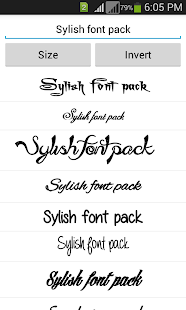
Add the fonts to the fonts resource directoryJust like string and drawable resources, the fonts are now available as resources.First step in making this happen is to add the font files to the res/font folderin your project. This ensures that they are packaged as resources, and are easilyaccessible in a similar way we access other types of resources: @font/niceFont in XMLor as R.font.niceFont in code. Create a font familyFont family is something that was introduced in Android, and it is used to definea group of fonts and their corresponding style.
So the system can determine whatfont resource to use for regular, bold and italic styles and weight configurations. A typical font family looks like this: NoteA really important thing to note is that we had to define attributes using both android and app namespaces.The app namespace is what ensures that the feature is backward compatible. Using the fontsNow that we have defined the fonts, we could either use it programmatically, directly in XML layouts, or via a style that will be applied to the view in the layout.Let’s have a look at how we could use the custom fonts in each case.
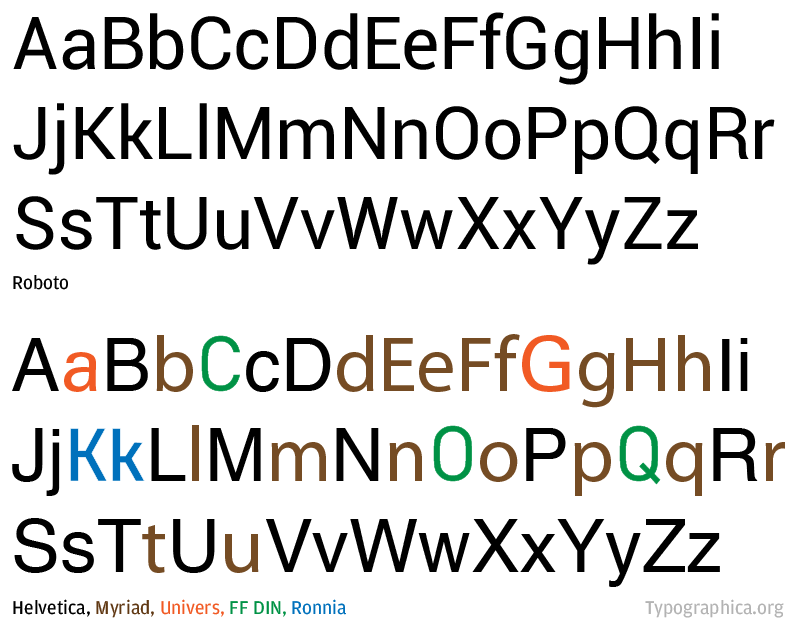
Using the font programmaticallyWe can decide to use this font programmatically in a way quite similar to how wehave always been doing, except that we’re not creating thisfrom an “asset”. Rather, we’ll be getting it as a resource.
Wiki Android Font Free Download
Doing this programmatically(for backward compatibility) will look like. Typeface typeface = ResourcesCompat. GetFont ( this, R. Appfont ); fontText. SetTypeface ( typeface ); b. Using the font-family directly in the layout fileYou can apply this font family created in step ii above directly in the layout file.Using it will look something like this: Something worth noting here is that it appears that one can specify the fontFamilyattribute using either the android or app namespace.The catch here is that theandroid:fontFamily attribute is not available for API levels below API 16, while we’retrying to backport this feature all the way to API 14.To go around this, gotcha, we can use the app namespace instead. However, there seems tobe another interesting discovery: Android Studio flags the app:fontFamily attribute as “Unexpected namespace prefix app found for tag TextView” as seen in the screenshot below,but it seems to work for me regardless of what AS is saying.(Dear reader, I’d love to get your feedback if you’re able to reproduce this weird behaviour too).c.
Using the font-family via a styleAnother usage of the font family is via a style (or text appearance). We could specifythe fontFamily attribute to use the font family created in step ii, and then in turnuse that as a text appearance or even style in the layout. Defining this in the styles.xmlfile will look something like: Instead, you will specify which font provider (like Google Fonts) you want to retrieve them from, and apply the typeface on the desired view. Check theresources and further reading section for a direct link to the official docs.Thank you so much for reading this post, please feel free to share if you found it helpful.Also, please feel free to make corrections, suggestions and ask questions in the comment section at the bottom of the page.Thanks to, and for reviewing this post.:tada:Thanks,Segun.
